
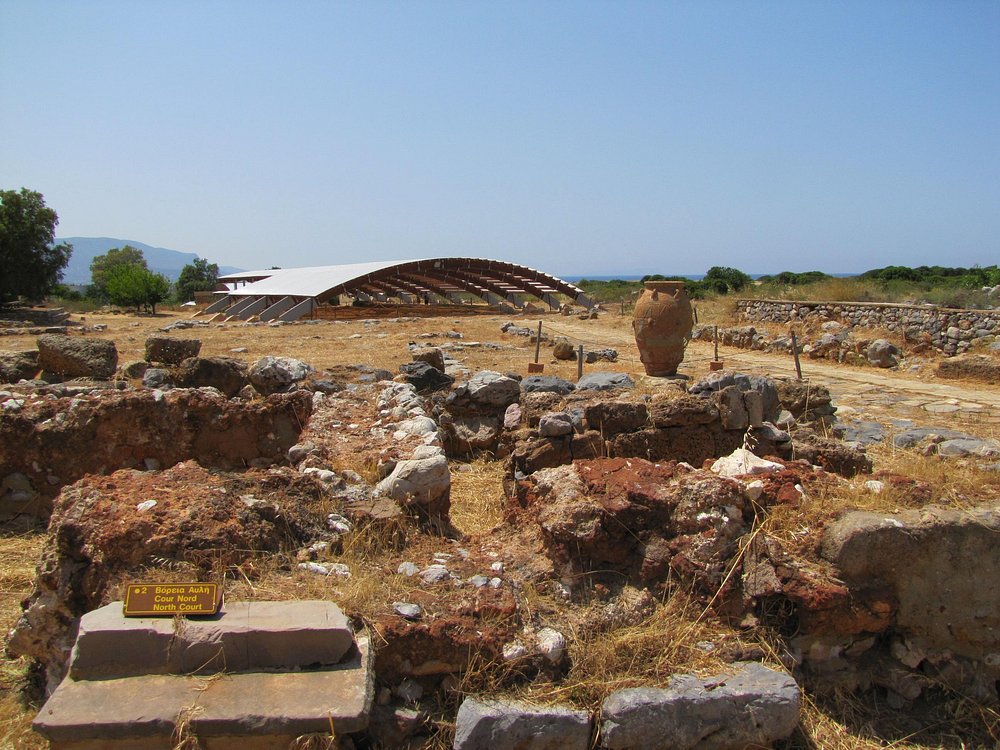
The Palace of Malia is one of the most significant Minoan palatial centers in Crete and one of the most important monuments on the eastern side of the island. It is located near modern-day Malia, at a site that connects the fertile plain, the sea, and the mountain ranges of Lasithi. The site was not merely a palace, but the heart of an organized Minoan city, with political, economic, religious, and commercial life.
The first palatial complex dates to around 1900 B.C., at the beginning of the Early Palatial period. The area had already been inhabited earlier, while organized settlement at the site dates back even further, to the 3rd millennium B.C. The palace was destroyed around 1700 B.C., along with other major palatial centers on Crete, and was subsequently rebuilt during the Neopalatial period.
The layout of the palace reveals the complex nature of Minoan society. A central courtyard, wings, storage rooms, workshops, ceremonial spaces, corridors, staircases, and organized neighborhoods surrounding the palace reveal a world of administration, production, trade, and ritual life. The central courtyard was not merely an open space; it was the core around which the functioning of the entire complex was organized.
The warehouses and production areas are of particular importance. The large pithoi, vases, storage areas, and workshops indicate that the palace collected, managed, and distributed goods. Olive oil, grain, wine, and other goods passed through an organized economic system that made Malia a powerful center of Minoan Crete.
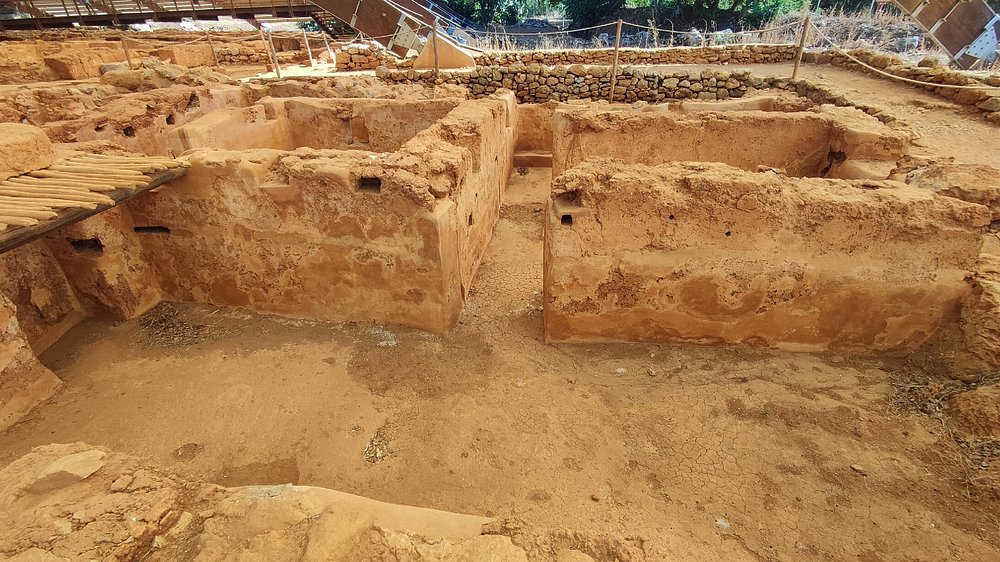
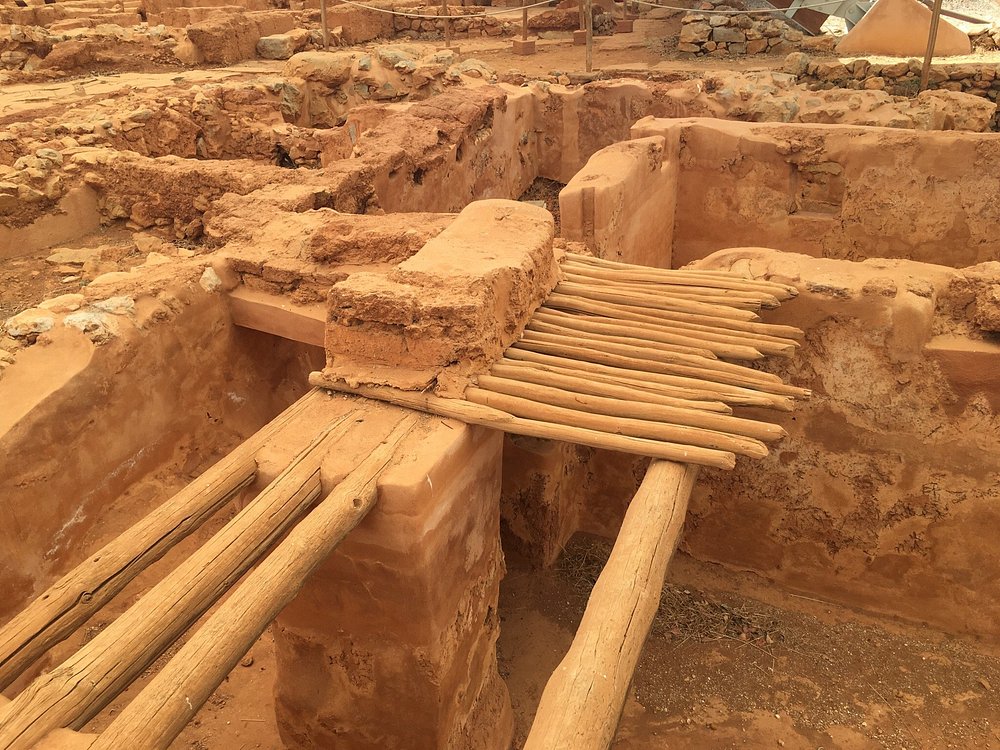
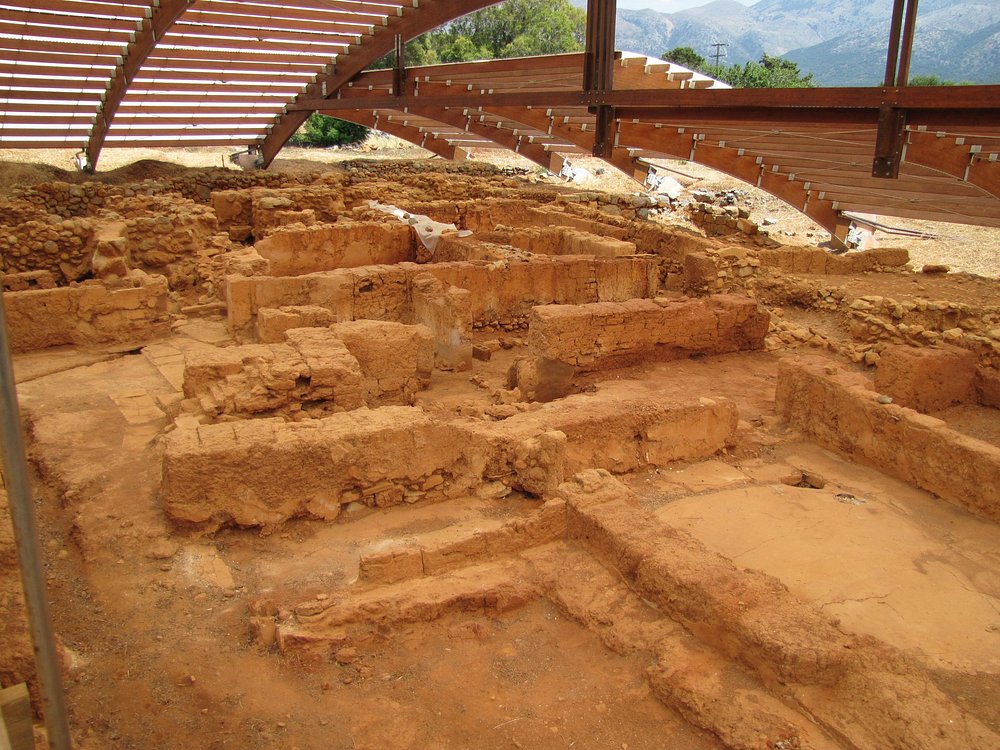
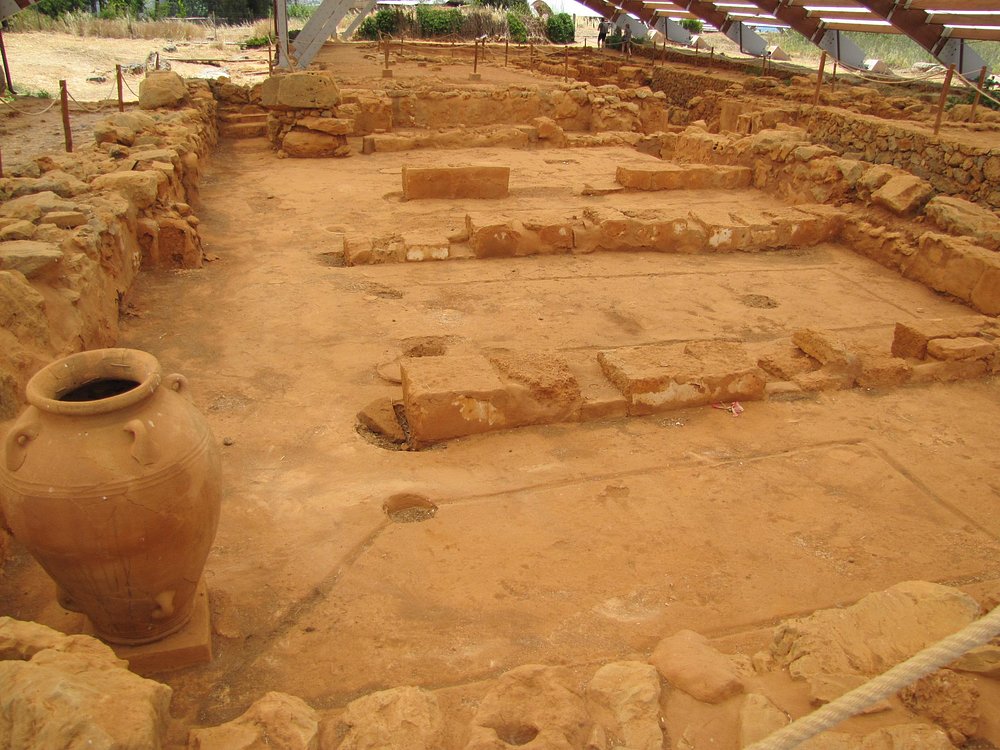
An extensive city developed around the palace. Excavations have brought to light neighborhoods and building complexes that show that life in Malia was not confined to the palace complex. The city had residences, streets, workplaces, and neighborhoods that were in continuous use from the Early to the Late Minoan period.
Archaeological research in Malia began in 1915 under the supervision of the Ephorate of Crete, and beginning in 1921, the French Archaeological School played a significant role in the systematic excavation and study of the site. The excavations revealed not only the palace but also parts of the ancient city that surrounded it, providing valuable insight into the urban planning and daily life of a major Minoan center.
Malia has experienced great destruction, but also periods of renewal. After the destruction around 1700 B.C., the palace was rebuilt and continued to function. Another destruction occurred around 1530 B.C., and activity at the site was later recorded once more. This cycle of destruction and reuse makes the Palace of Malia a valuable testament to the resilience and evolution of Minoan civilization.
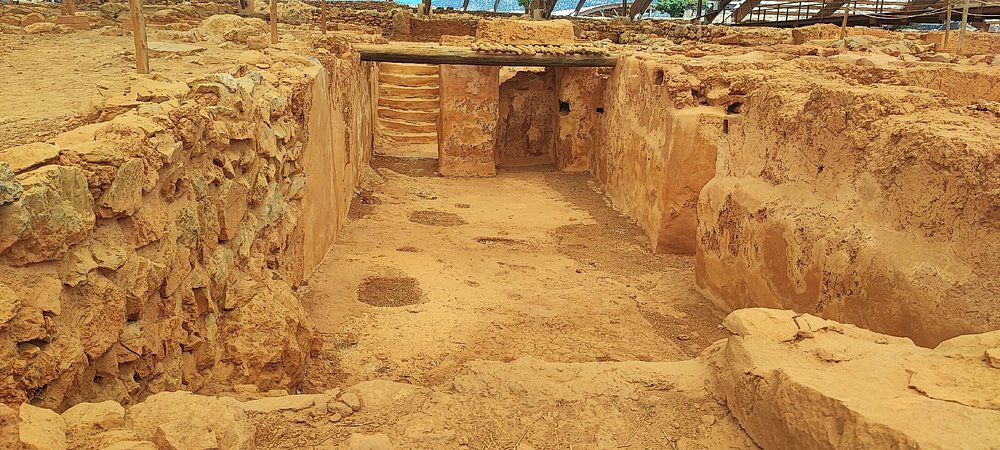
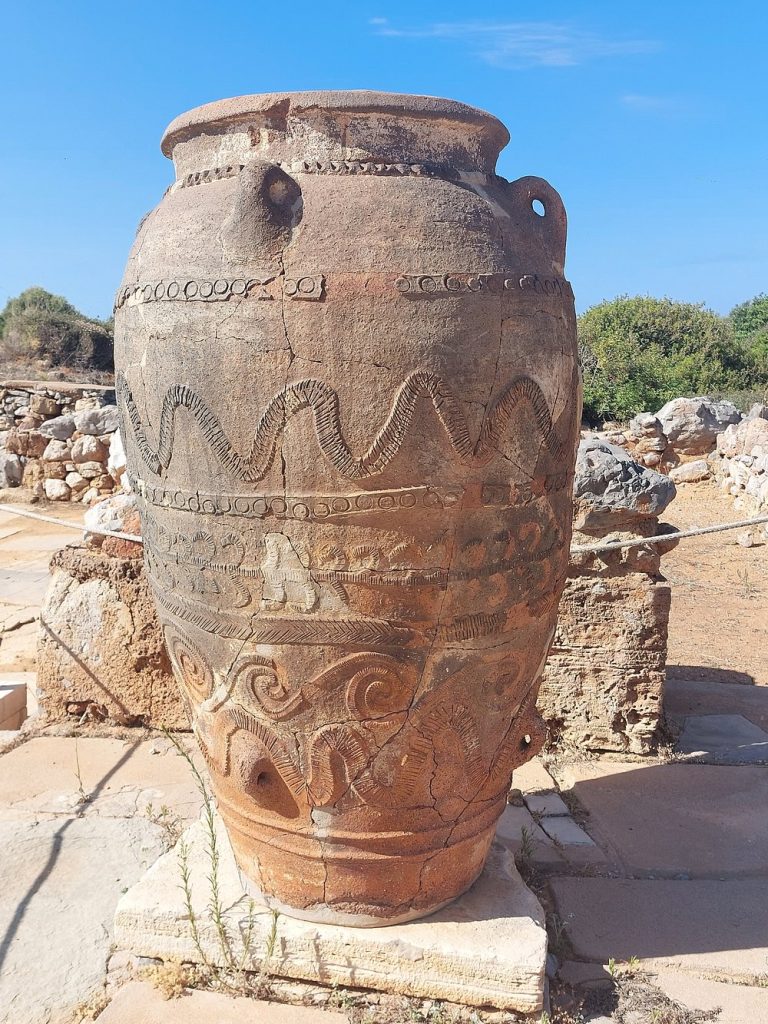
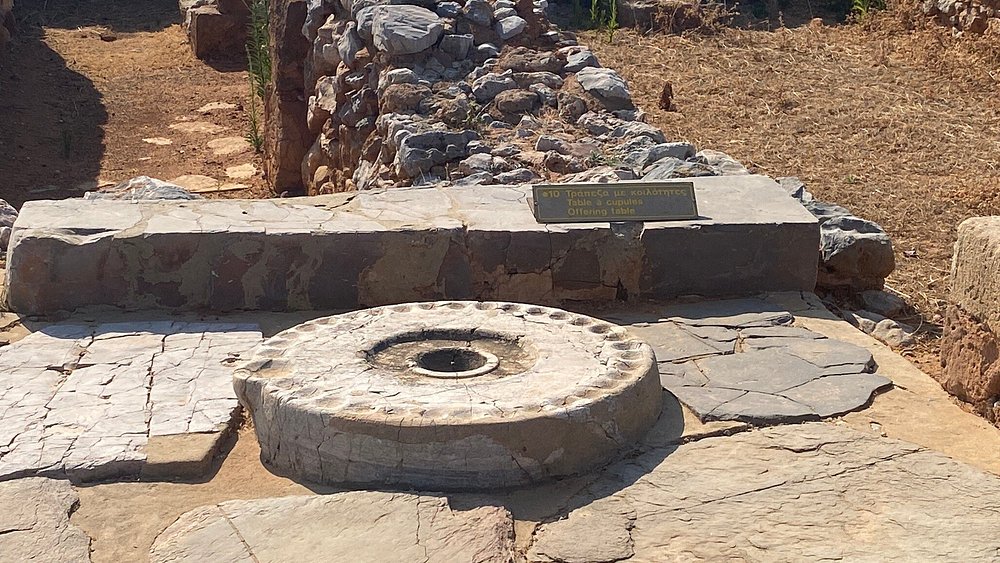
Today, visitors walk through a space where the stone, earth, and light of Crete reveal the scope of a civilization that left a deep mark on the Aegean. The Palace of Malia does not impress with its restored facades, but with the authenticity of its archaeological landscape. It is a place that speaks of organization, power, ritual, production, and maritime connections—a space where Minoan Crete appears less mythical and more real, human, and alive.
From Voulismeni, the route to the Palace of Malia runs along the Northern Road Axis of Crete, heading toward Heraklion and Malia.
As you leave the village, follow the road toward Neapoli and join the main road to Malia. The route continues west, passing through the Latsida area and descending toward the Malia coastal zone.
Before you go deep into the town of Malia, follow the signs to the archaeological site or to Potamos Beach. The palace is located east of the town of Malia, very close to the sea.
The trip from Voulismeni is short and ideal for a day trip. By car, it takes about 15–20 minutes, depending on traffic and the time of year.